Open post

Blog Post #3 – When a Course Forgets You Exist

Last semester I took a course where everything was done one way. You read the textbook, you write the essay, you submit it. That’s it. No options, no flexibility, nothing. And honestly for a while I just thought that was normal — that’s just how school works right?

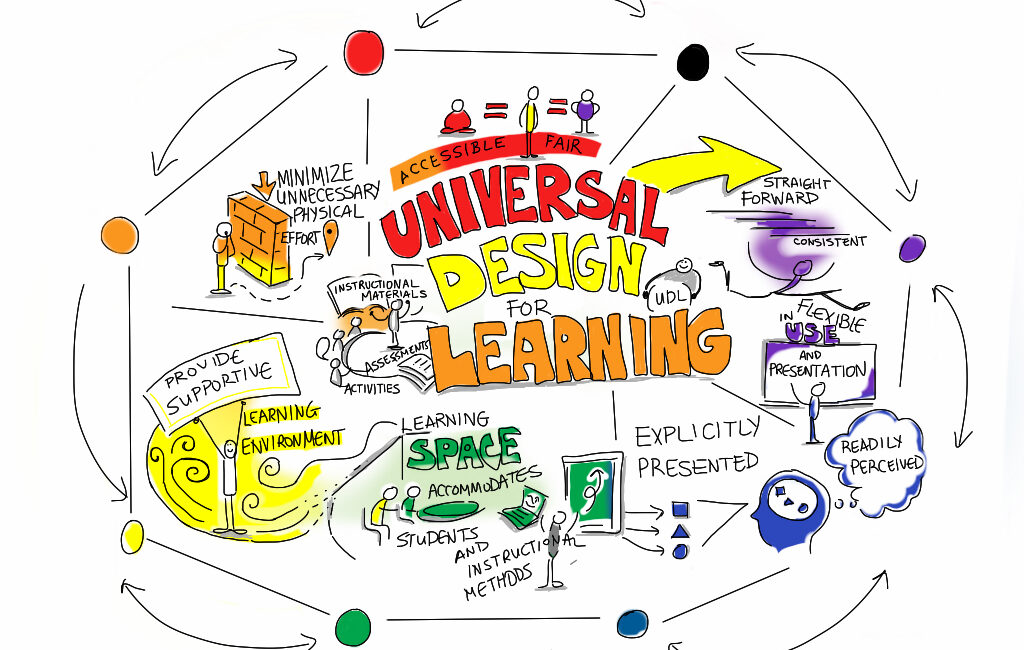
But after reading about Universal Design for Learning this week it hit me — that course wasn’t designed for me. It was designed for some imaginary “average” student who loves reading dense textbooks and is great at writing long essays. CAST (2018) basically says there is no average learner, everyone learns differently, and designing for one type of person automatically puts everyone else at a disadvantage.

What UDL actually means

UDL has three main principles — giving learners multiple ways to receive information (representation), multiple ways to show what they know (action and expression), and multiple ways to stay motivated (engagement). That course had basically none of these.

Like for representation — everything was just readings. No videos, no diagrams, nothing visual. Some people just don’t learn well from walls of text and that’s not their fault, it’s just how they’re wired. A short video or a simple diagram alongside the reading would have made a huge difference for a lot of people.

For expression — why is an essay the only way to prove you understand something? Some people are way better at explaining things out loud or visually. The goal is to show understanding, not to prove you can write a 5 paragraph essay.

And engagement — there was zero flexibility. Bad week? Tough. Had an exam in another class? Not my problem. It reminded me a lot of 75 Hard actually one size fits all, no exceptions, and if you can’t keep up then that’s on you. But that’s not good design, that’s just pressure.

How this connects to what we’re building

For our password security resource, our audience is mostly non-technical people. If we design it like that course — one format, one way to engage — we’re going to lose half our learners before they even get to the good stuff. So we’re trying to keep the language simple, give people hands-on activities like the CrackStation challenge, and make sure there’s always enough context that you don’t need a CS degree to follow along. That’s what the Inclusive Design Research Centre (n.d.) talks about too — inclusion has to be built in from the start, not added as an afterthought.

References

CAST. (2018). Universal design for learning guidelines version 2.2. http://udlguidelines.cast.org

Inclusive Design Research Centre. (n.d.). Inclusive design guide. https://guide.inclusivedesign.ca/

Blog Post #2 – Project-based and design thinking: two approaches that actually make sense for teaching password security

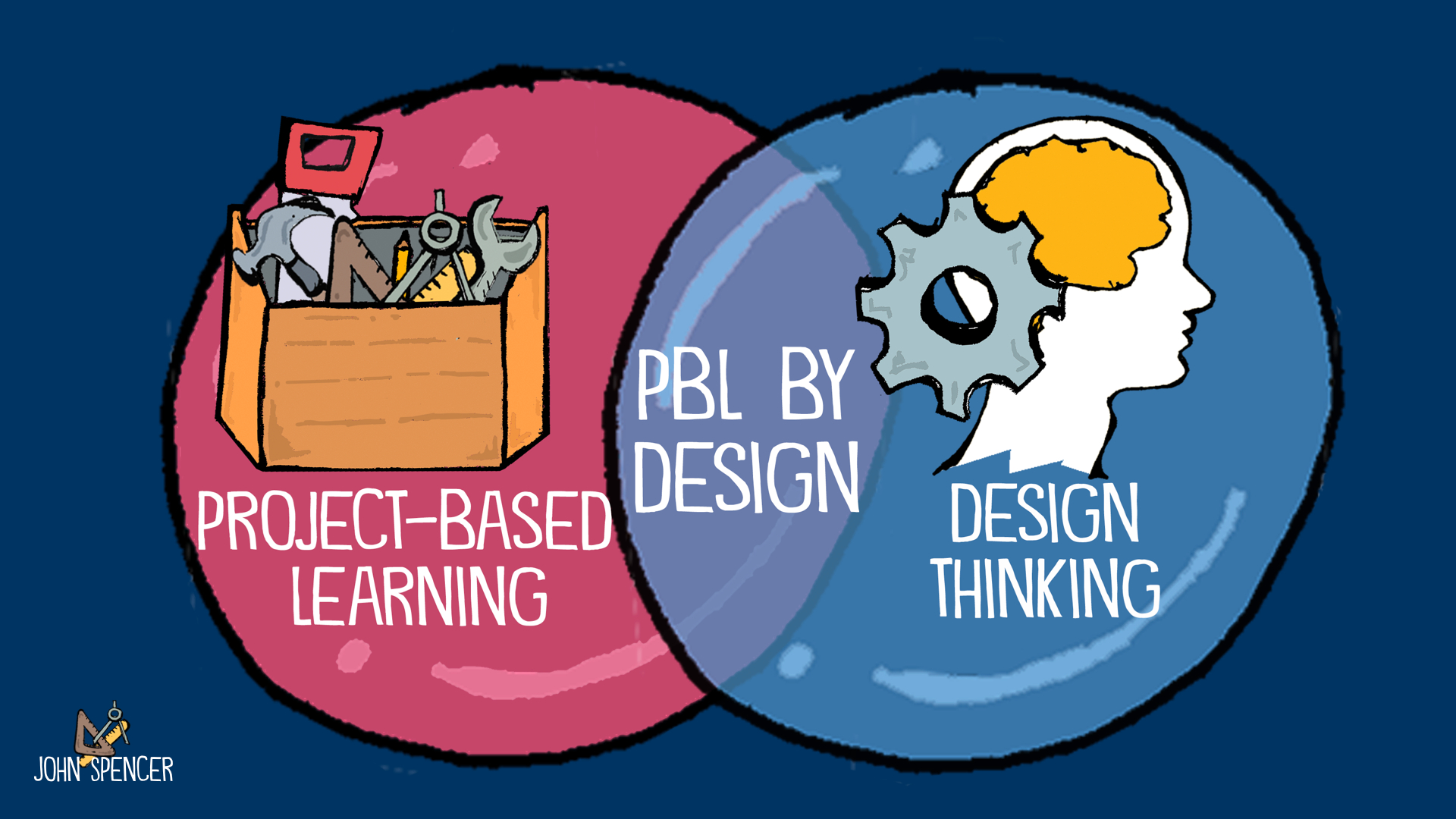
When I started thinking about how to teach hashing, salting, and what actually happens when a site stores your password, I kept running into the same wall. The concepts make sense once you see them but just explaining them doesn’t really work. You can define a hash function ten different ways and it still feels disconnected from anything real. So when I started looking at project-based learning and design thinking as instructional approaches, both of them stood out immediately because they fix exactly that problem.

What is project-based learning?

Project-based learning (PBL) is built around one core idea: learners produce something real, not just answer a test. According to PBLWorks (the Buck Institute for Education), PBL is a teaching method where students gain knowledge and skills by working over an extended period to investigate and respond to an authentic, complex question or problem. The learning happens through the process of building something not just absorbing content and repeating it back.

For password security, this maps really naturally. Imagine asking learners to do a short “security audit” of a fictional company’s login system they have to figure out whether that company is storing passwords safely, identify what’s broken, and explain what should change. To do that well, they genuinely need to understand what hashing and salting do. The project gives them a reason to care about the answer.

In technology-mediated environments, PBL works especially well because the tools are already there shared docs, browser-based coding environments, publicly available breach datasets. But the design has to be intentional. If the project is too open-ended with no scaffolding, learners spend their energy figuring out what they’re even supposed to do, rather than learning the concept. Structure matters a lot here.

What is design thinking?
Design thinking is a problem-solving framework built around five stages: empathize, define, ideate, prototype, and test. It’s less about reaching a single correct answer and more about understanding a problem deeply before trying to solve it. According to IDEO’s Design Thinking for Educators toolkit (2012), design thinking is human-centered, collaborative, and experimental it treats learning itself as a design process.

For our topic, the empathize stage is where things get interesting. Instead of starting with SHA-256, you start by asking: who is actually affected when passwords are stored badly? What does a real person experience when their account gets compromised in a breach? That reframe turns security from a technical exercise into a human problem — which is a much stronger entry point, especially for a non-technical audience, which is exactly who our resource is designed for.

In an online environment, design thinking also fits naturally because it’s iterative by design. Learners prototype an idea, test it, get feedback, revise. That cycle works well with tools like shared whiteboards or simple interactive mockups no physical classroom needed.

Do these belong in our Interactive Learning Resource?

Yes and honestly, we’re already using both without labeling them. The “Crack the Hash Challenge,” where learners use CrackStation to test weak hashed passwords and see them crack in real time, is essentially a mini PBL activity. Here’s a real tool, here’s a real scenario, figure out what’s vulnerable and why. That’s the core of project-based learning in practice.

Design thinking shows up in how we framed the whole resource starting with “what actually happens to your password when you log in?” before jumping into any cryptography. That’s the empathize stage: getting learners to feel the stakes of the problem before we explain the solution.

Neither approach works perfectly alone here. PBL needs some baseline knowledge first — you can’t audit a system you don’t understand at all. And design thinking can get too abstract if it never grounds out in actual technical concepts. But together, and alongside what Trevor wrote about direct instruction providing that initial foundation, they give learners a complete arc: understand it, care about it, then actually do something with it.

Also check out Sneh’s post on open pedagogies  the idea of learners producing work that lives beyond the course connects really well with the public-facing side of a project-based approach.

References
Ertmer, P. A., & Newby, T. J. (2013). Behaviorism, cognitivism, constructivism: Comparing critical features from an instructional design perspective. Performance Improvement Quarterly, 26(2), 43–71. https://doi.org/10.1002/piq.21143

IDEO. (2012). Design thinking for educators (2nd ed.). https://designthinking.ideo.com/resources/design-thinking-for-educators

PBLWorks / Buck Institute for Education. (n.d.). What is PBL? https://www.pblworks.org/what-is-pbl

Open post

Blog Post #1 – Why I Quit 75 Hard (And What I Learned From It)

Last year I decided to start 75 Hard. For anyone who doesn’t know, it’s a 75-day challenge where you must do two workouts a day, follow a strict diet, drink a gallon of water, read 10 pages of a book, and take a progress photo  every single day, no exceptions.

I started it because I wanted to go to the gym regularly and wasn’t seeing much progress in me and I wanted to lose fat and become a better version of myself. I was also someone who never touched a book, so I thought this would help me build that habit too. For almost 8 months I was consistent with the gym waking up early, going to bed early, feeling good about myself (except for the diet a little too hard for me).

But then finals hit. I had 5 courses that semester , a part-time job which was 3 days a week, and I failed an exam which I had studied the hardest for. That really got to me. I already had too much to balance work, gym, and studying all at once.

The only thing I had to overcome was my diet. Me and my friends usually hang out once or twice a week that’s just how we hang out and 75 Hard gave me zero flexibility for it. It’s a win or lose proposition. Miss one thing and you start over from day one. It began to impact my friendships, my temper and my disposition and before long, I couldn’t keep up.

Looking at this through what I read this week, I think the program failed me because it ignored what Self-Determination Theory calls relatedness  staying connected to the people around you. It was also completely behaviorist strict rules, no room to adapt. A better design would have given me some autonomy to make it work with my real life instead of treating every exception as a failure.

Now I’m back in the gym training to achieve the same goals. But, I’ve found that motivation is not only a matter of willpower; it’s whether the design works for your lifestyle or you can live in the design for a prolonged period.

References
Ertmer, P. A., & Newby, T. J. (2018). Behaviorism, cognitivism, constructivism. In R. West (Ed.), Foundations of learning and instructional design technology. EdTech Books. https://edtechbooks.org/lidtfoundations/behaviorism_cognitivism_constructivism

Ryan, R. M., & Deci, E. L. (2000). Self-determination theory and the facilitation of intrinsic motivation. American Psychologist, 55(1), 68–78. https://doi.org/10.1037/0003-066X.55.1.68

Scroll to top